


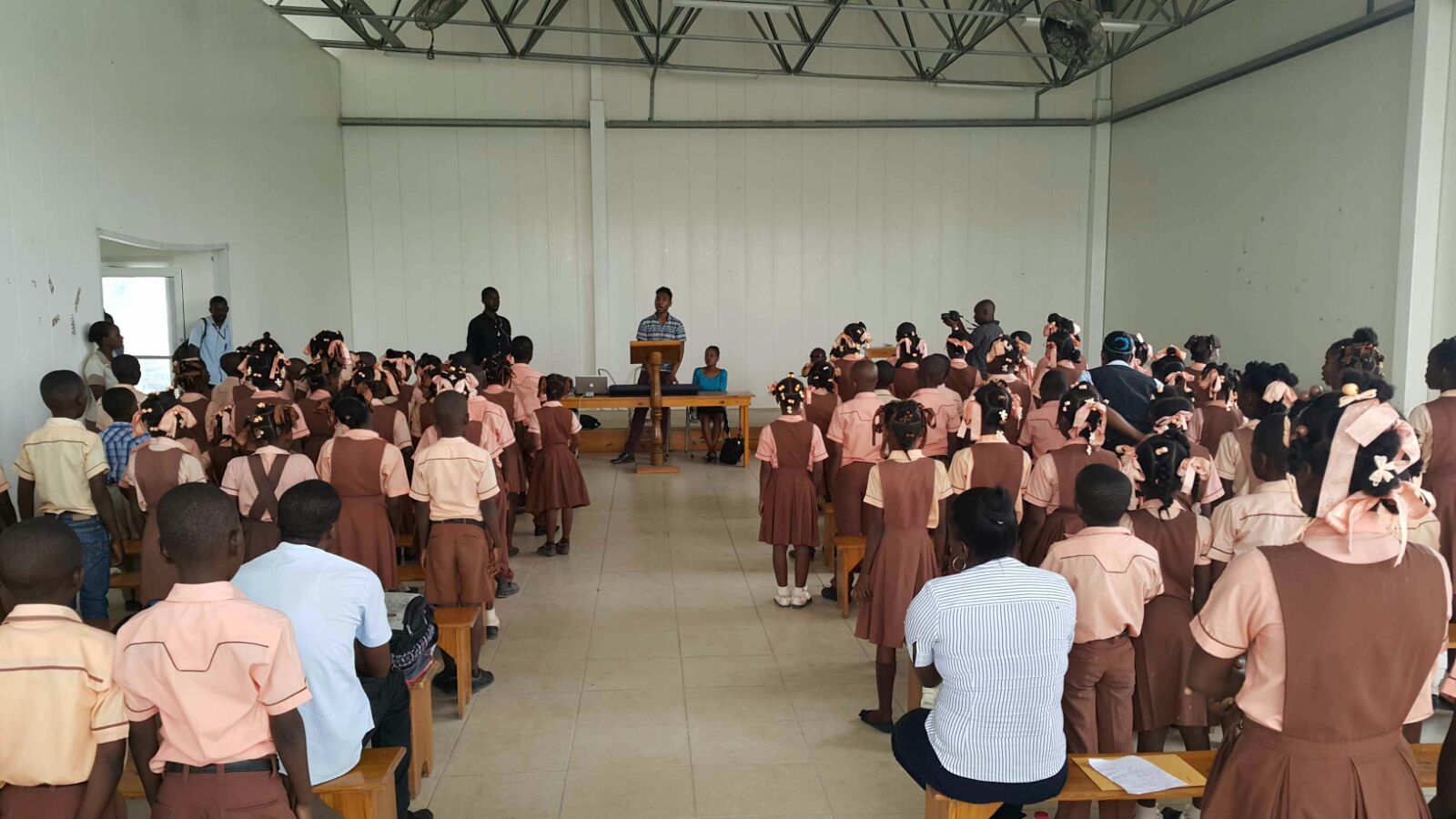

ABF Voices of Haiti is the pilot project for the ABF Voices of programme, which uses music and choral singing as educational tools to develop the social and emotional skills of children and young people living in situations of extreme vulnerability. The choir offers a safe, stable setting for personal growth, connection and renewed confidence in the future.
The project began in Cité Soleil, one of Haiti’s most fragile communities, where extreme poverty, widespread violence and limited access to essential services shape everyday life. Here, music becomes a practical means of protection, inclusion and empowerment, giving young people an educational environment in which they can experience belonging, discipline and positive relationships.
The context and the need
Haiti faces deep-rooted vulnerabilities that profoundly affect the development of its youngest citizens. Extreme poverty, social instability and weak essential services restrict access to education, protection and opportunity. In communities such as Cité Soleil, daily life is marked by material hardship and fragile social ties, with serious consequences for psychosocial wellbeing and young people’s ability to imagine a different future.
Rising insecurity exposes children and adolescents to tangible risks, including violence, recruitment by criminal groups and early school leaving. Without safe and consistent spaces, it is difficult to develop essential social and emotional skills or build positive relationships. The need for education is therefore inseparable from the need for protection and belonging: young people need places where they can grow together and realise their full potential.
ABF’s response
ABF works in Haiti through an integrated approach that combines the choral project with an established presence in education, healthcare and access to water. The youth choir provides a safe and consistent learning environment where music is used to build social and emotional skills, discipline, cooperation and self-esteem.
The project forms part of a broader educational ecosystem delivered with a local partner. This makes it possible to address essential community needs while creating the foundations for stable, sustainable learning and development. The approach strengthens the resilience of young people, their families and the community as a whole.
Why it matters
- Educational poverty and social exclusion
- A shortage of safe spaces for children and young people
- A high risk of involvement in cycles of violence
- The need for psychosocial support and continuity in education
The project
Partner
St. Luke Foundation is a Haitian organisation with more than twenty years’ experience in education, healthcare and humanitarian work, and an in-depth understanding of the country and its local communities.
Key activities
- Weekly choir rehearsals with a structured educational approach
- Activities that develop social and emotional skills
- Engaging families and the wider community
- Monitoring wellbeing and participation
Objectives
- Develop social and emotional skills through music
- Strengthen continuity in education
- Offer practical alternatives to marginalisation
Community impact
The project strengthens the community’s human, social and educational capital by addressing factors that drive vulnerability among children and young people. Through choral singing, participants build essential social and emotional skills – including self-awareness, emotional self-management, collaboration and responsibility – improving individual wellbeing and the quality of their relationships.
As part of ABF’s wider commitment to education, health and social development, Voices of Haiti helps create the conditions for sustained, meaningful growth. It gives young people a safe, structured space and supports the wider community by fostering participation, belonging and positive opportunities for growth, making the project a lasting foundation for resilience and a shared future.
Project phases
- 2016-2020: launch and consolidation of the choir
- 2021-2024: Consolidated the programme and guided participants through their transition into adulthood.
- 2026: completion of the first learning cycle and preparation for graduation


