


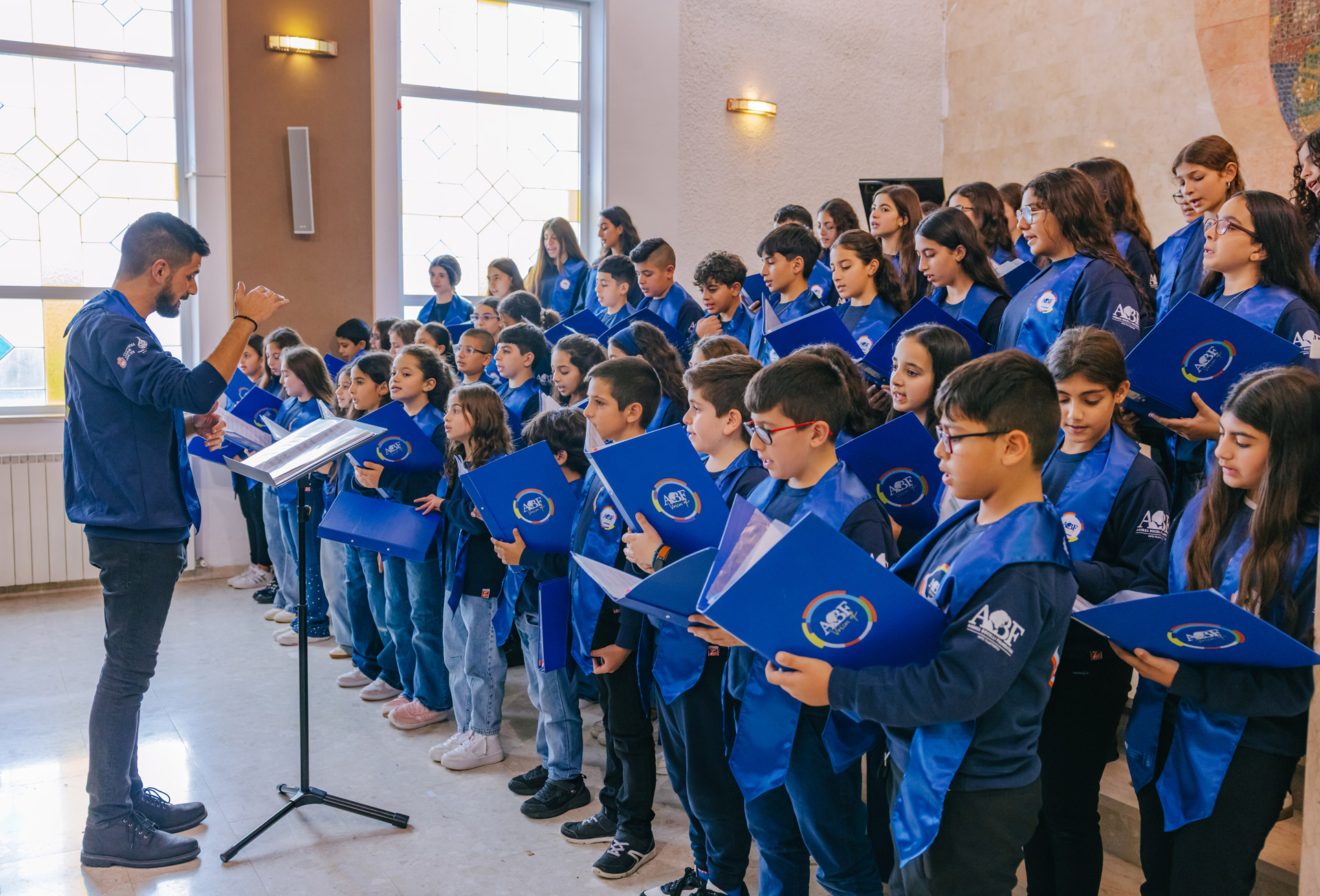
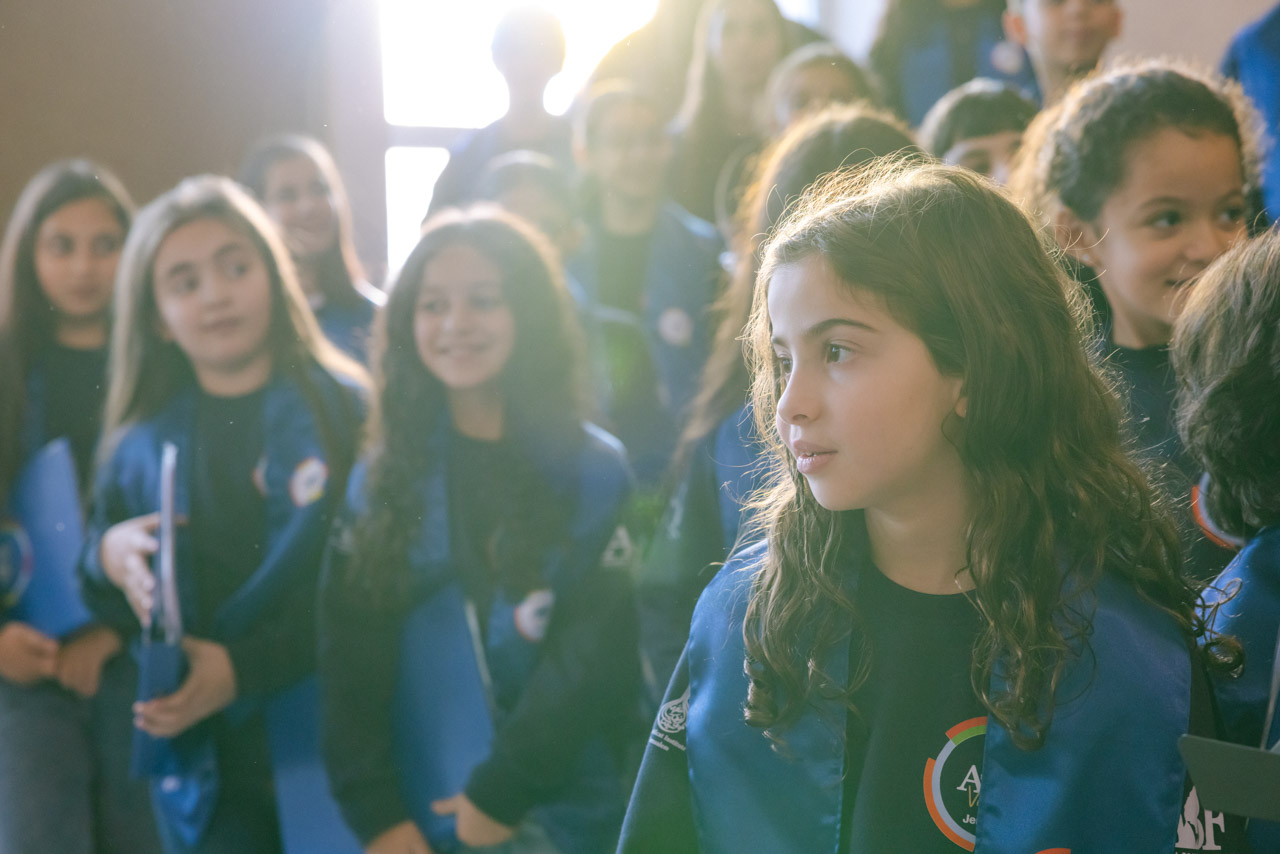
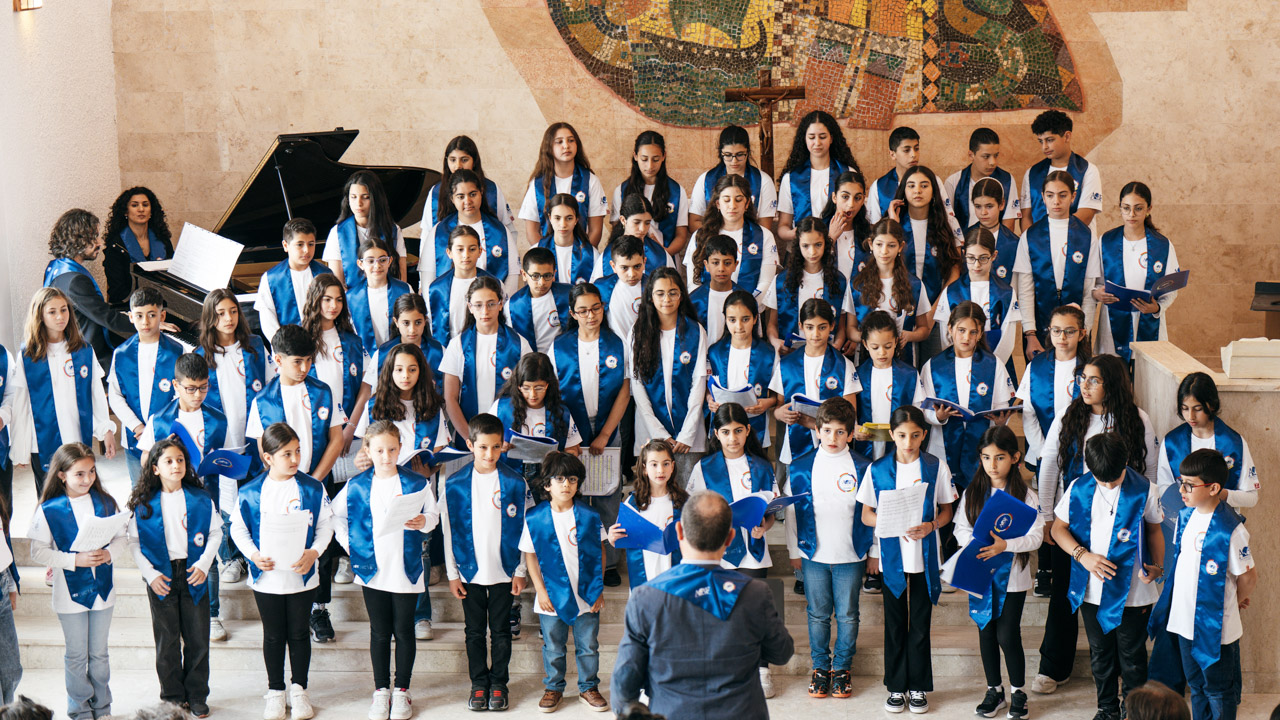
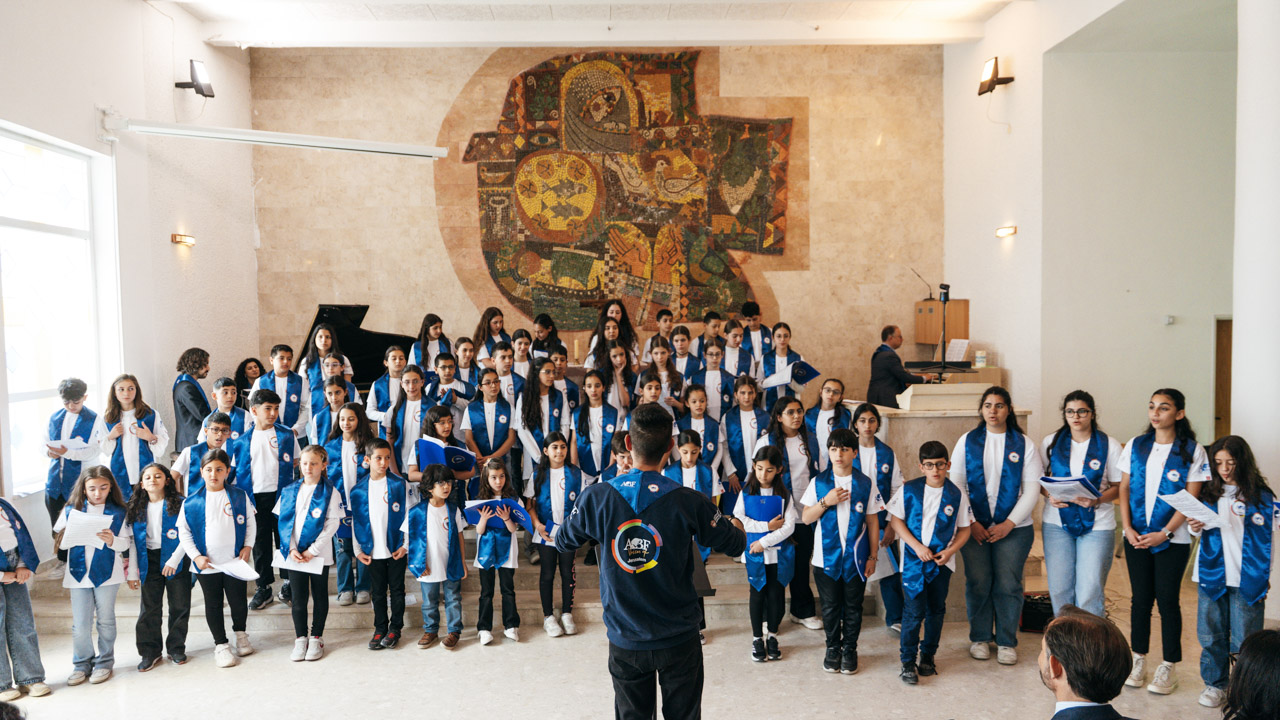
ABF Voices of Jerusalem is part of the ABF Voices of programme, which uses music and choral singing as educational tools to foster intercultural dialogue and develop social and emotional skills. It brings together children and young people from different cultural and religious backgrounds in a shared learning experience founded on listening, collaboration and mutual respect. Music becomes a common language with the power to bridge differences.
The project creates an inclusive learning environment focused on personal growth and peaceful coexistence. In a complex setting such as Jerusalem, it gives young people a safe and consistent space where they can meet, build positive relationships and experience the value of dialogue first-hand, transforming choral singing into a genuine community experience.
The context: the need and the challenge
ABF Voices of Jerusalem operates in an area of considerable social and geographical complexity, bringing together children and young people from East Jerusalem and Bethlehem – neighbouring communities, each facing its own vulnerabilities and opportunities. In both places, access to safe, inclusive and consistent educational and cultural spaces is limited, affecting psychosocial wellbeing, the quality of relationships and the development of essential life skills.
The project responds by providing a stable, shared learning experience in Area C, connecting young people from different backgrounds and strengthening their interpersonal and emotional skills. As a universal language, music – and choral singing in particular – encourages listening, collaboration and a sense of belonging, helping to build a learning community centred on social cohesion and a shared future.
ABF’s response
ABF has created a single youth choir with an educational focus, bringing together children and young people from East Jerusalem and Bethlehem in a shared pathway within the ABF Voices of programme. Music and choral singing are used to strengthen social, emotional, interpersonal and collaborative skills, responding to the needs of young people whose lives are different yet closely interconnected.
Rehearsals and educational activities take place in Area C, close to Bethlehem, at a location selected for its accessibility to participants from both communities. In partnership with the Magnificat Institute, an educational partner with deep local roots, the choir provides a structured, continuous environment where listening, discipline and cooperation become part of everyday learning.
Through a stable and integrated programme, ABF is helping create a shared learning space that values the distinct experiences of East Jerusalem and Bethlehem while offering a tangible experience of coexistence and belonging. Music thus serves as an educational catalyst, unlocking each child’s potential, uplifting families and communities, and fostering positive relationships and constructive dialogue.
Why it matters
- Limited access to alternative educational opportunities and social fragmentation restrict children’s and young people’s ability to take part in inclusive, sustained learning experiences.
- There is a shortage of safe, neutral and shared learning spaces where young people from different backgrounds can meet and grow together.
- Opportunities for peer relationships and dialogue are limited, increasing the risk of isolation and social withdrawal.
- Young people need psychosocial support and opportunities to develop the social and emotional skills required to navigate a complex and unstable environment.
- They also need continuity in education, a positive sense of belonging and a structured experience that builds trust, cooperation and community.
The project
The Magnificat Institute of Jerusalem, founded and run by the Custody of the Holy Land, is a music school with a long and respected educational tradition in the heart of Jerusalem’s Old City. It is a unique setting for artistic and personal development, where children and young people from different cultural and religious backgrounds study and grow together through music, making dialogue and coexistence part of daily life.
The Custody of the Holy Land has been present in Jerusalem, Bethlehem and the surrounding territories for centuries. Deeply rooted in the local context, it works to protect cultural heritage and develop educational and social initiatives that serve local communities. Through the Magnificat Institute, the Custody supports programmes that use music to bring people together, foster inclusion and encourage personal growth.
The partnership with the Magnificat Institute and the Custody of the Holy Land gives ABF Voices of Jerusalem a strong educational base, deep knowledge of the local context and an approach that is sensitive to the cultural and social realities of young people from East Jerusalem and Bethlehem.
Key activities:
- Establishing and running a single youth choir for children and young people from East Jerusalem and Bethlehem, with structured weekly rehearsals.
- Embedding social and emotional learning – including emotional self-management, communication, teamwork and respect for differences – within rehearsals.
- Providing psychosocial support through close attention to emotional wellbeing, safe spaces where participants can be heard and consistent educational guidance in a complex environment.
- Gradually involving families, educators and local partners, strengthening the choir as a stable learning environment and a community resource for young people.
Objectives
- Give children and young people from East Jerusalem and Bethlehem a shared learning experience centred on connection and collaboration.
- Foster dialogue, coexistence and emotional wellbeing through choral singing and psychosocial support.
- Create a safe, consistent learning environment that nurtures belonging, trust and positive relationships.
- Use music as a common language that can harmonise differences and support personal growth.
Community impact
ABF Voices of Jerusalem is building its community impact over time by creating a shared learning space that is recognised and trusted, involving not only children and young people from East Jerusalem and Bethlehem, but also their families. Parents are gradually brought into the educational process and project activities, becoming active partners in a pathway that strengthens trust, continuity and a greater sense of security for participants. Their involvement helps establish the choir as a reliable point of reference, improving young people’s emotional wellbeing and the quality of family relationships.
Over time, the project has earned recognition and trust within the community, which values its educational and relationship-building role. Regular rehearsals and educational activities in Area C have made the choir a tangible, predictable and dependable presence in a fragmented setting. Its impact extends beyond individual journeys: the project builds wider trust, strengthens informal education networks and nurtures a culture of encounter grounded in shared experience and supported by the adults in each young person’s life.


