Children’s rights are fundamental human rights that recognize every child’s ability to grow, develop, and live in a protected, healthy, and stimulating environment.
These rights extend beyond physical protection to encompass a child’s psychological, emotional, social, and educational well-being.
The United Nations Convention on the Rights of the Child, adopted in 1989 and ratified by 196 countries (all UN member states except the United States), is the international treaty that establishes and seeks to guarantee the rights of all children, regardless of social, cultural, ethnic, or religious background, recognizing their vulnerability and the need for special protective measures.
The Convention affirms that every child has the right to a dignified life, to protection from violence and exploitation, and to access to quality education.
It also states that children have the right to express their ideas, to participate in cultural life, and to be respected as individuals with their own opinions.
The Convention places on member states the obligation to adopt legislative and administrative measures to ensure its implementation and to monitor progress through periodic reports.
What the Convention on the Rights of the Child Says
The treaty is composed of 54 articles, divided into three main sections covering:
- general rights,
- specific rights,
- and monitoring and implementation procedures.
It is based on four core principles that must be applied to all decisions affecting children.
Let’s take a closer look at what they are.
The Four Core Principles
- The Right to Non-Discrimination
Article 2 guarantees that all children enjoy the same rights:
“Without distinction of any kind, irrespective of the child’s or their parents’ or legal guardians’ race, colour, sex, language, religion, political or other opinion, national, ethnic or social origin, property, disability, birth or other status.”
- The Best Interests of the Child
Article 3 establishes that:
“In all actions concerning children, whether undertaken by public or private social welfare institutions, courts of law, administrative authorities, or legislative bodies, the best interests of the child shall be a primary consideration.”
- The Right to Life, Survival, and Development
Article 6 commits States Parties to:
“Ensure to the maximum extent possible the survival and development of the child.”
- The Right to Be Heard and to Participate
Article 12 states that:
“Children who are capable of forming their own views have the right to express those views freely in all matters affecting them, with their opinions being given due weight in accordance with their age and maturity.”
These four principles are the core around which the interpretation and application of the Convention’s rights revolve at a global level.
The 10 Fundamental Rights
The UN Convention on the Rights of the Child sets out numerous rights that every child should enjoy, which can be summarized into ten fundamental rights:
- Non-discrimination
The right to equality, without distinction of race, colour, sex, language, religion, political or other opinion, national or social origin, wealth, birth, or any other status. - Health and health services
The right to health, which includes adequate nutrition, access to safe drinking water, and appropriate healthcare in case of illness. - Right to education
The right to education. The Convention establishes that primary education must be compulsory and free for all children.
It also promotes access to different forms of secondary education, commits to making higher education accessible based on individual capacity, and to providing educational and vocational guidance for all minors. - Leisure, recreation and cultural activities
The right to play, rest, leisure, and recreational activities appropriate to the child’s age.
Children must also be able to freely participate in cultural and artistic life. - Freedom of expression
The right to freedom of expression, which includes the freedom to seek, receive, and share information and ideas through any medium of the child’s choice. - Protection from all forms of violence
The right to protection from violence, understood as any form of physical or mental harm, neglect, maltreatment, or exploitation. - Children in armed conflicts
The right to protection and care for children involved in armed conflict. - Child labour
The right to protection from economic exploitation and from being forced to perform any work that is dangerous, interferes with education, or is harmful to health or physical, mental, spiritual, moral, or social development. - Separation from parents
The right to care and support from both parents, even if they live apart. - Children with disabilities
The right to special assistance to ensure that children with disabilities enjoy the same rights as all other children.
ABF’s Projects
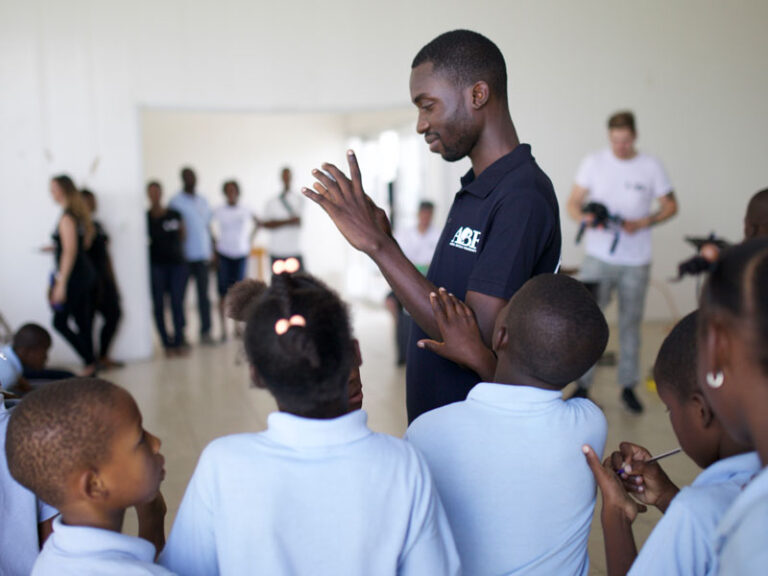
In pursuing its mission of “Empowering people and communities,” the Andrea Bocelli Foundation (ABF) creates and develops a variety of educational projects to promote children’s rights, based on the belief that education is the main tool of empowerment for future generations.
Since 2011, ABF has been implementing educational projects worldwide, supporting the right to education in line with Goal 4 of the United Nations 2030 Agenda.
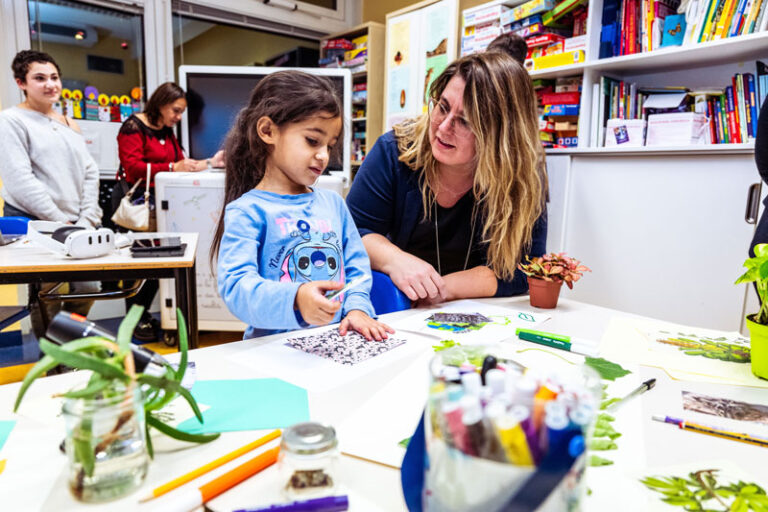
One example is the ABF Digital Lab, a project designed to promote learning environments that encourage interaction, communication, and relationships through the use of new digital technologies.
ABF Digital Lab operates both:
- within hospitals that are part of the Italian Pediatric Hospitals Association (AOPI), ensuring quality education for hospitalized children, and
- in schools rebuilt by ABF after the earthquake that struck the Marche region in 2016.
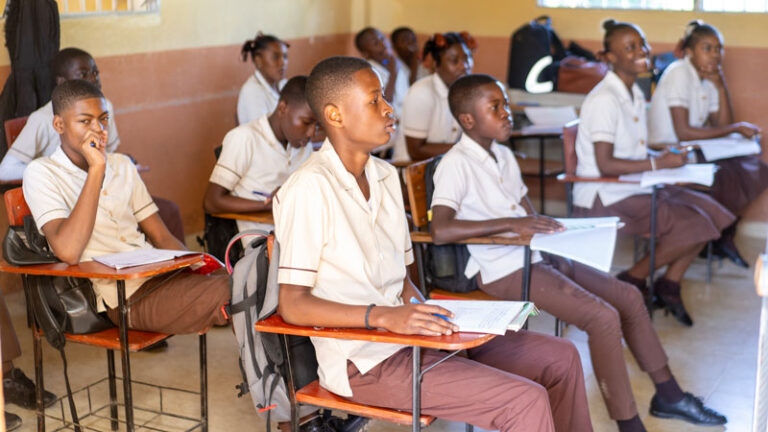
ABF is also active in six schools in Haiti, guaranteeing equitable, quality education and providing a safe refuge from gang violence to over 3,600 students.
Education is not the only focus.
In Haiti, and in line with Goal 6 of the 2030 Agenda, since 2013 the ABF Water Truck Project has been delivering 24,000 gallons of clean water every day to more than 400,000 people living in the slums of Cité Soleil.
This support is essential for Haitian children who, together with the elderly, are the most vulnerable and most exposed to the serious consequences of dehydration and lack of hygiene.