Youth education is a complex process that supports personal growth across multiple dimensions. Beyond the acquisition of knowledge, it contributes to the development of individual identity, relationships, independence, and the ability to navigate life experiences consciously and thoughtfully.
In this article, we explore the fundamental elements that underpin young people’s educational journeys, the roles played by families and schools, and the projects Andrea Bocelli Foundation (ABF) develops to support youth education.
The Fundamental Pillars of Education
An educational journey should promote personal development in all its dimensions, including the development of so-called transferable skills, or soft skills. These encompass a broad range of non-technical abilities and forms of knowledge that help young people better understand themselves, build relationships with others, and participate responsibly in community life.
The pillars of education also include values, attitudes, and relational skills that accompany young people as they grow, helping shape how children and adolescents relate to themselves, others, and society.
Respect and Empathy
Respect and empathy are learned first and foremost through everyday relationships. Parents, teachers, and educators, in particular, have a responsibility to foster these qualities through their own behaviour, demonstrating consideration for others’ perspectives, listening without judgment, and acknowledging emotions and needs even when they differ from their own.
For example, when a young person faces a difficult or frustrating situation, rather than immediately offering a solution or correcting their behaviour, the adult should give them time to explain what happened and try to understand what they are experiencing.
Respect for each individual’s uniqueness and the ability to listen to others also underpin the relational approach adopted by ABF atelieristas.
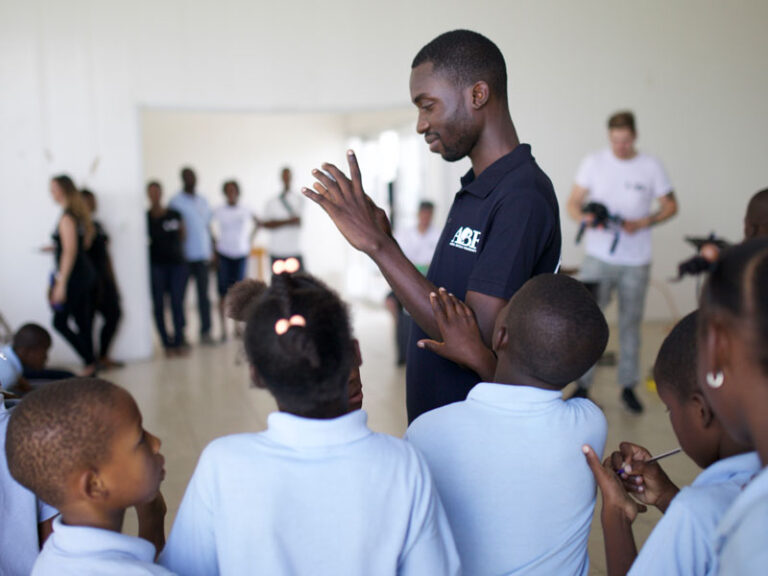
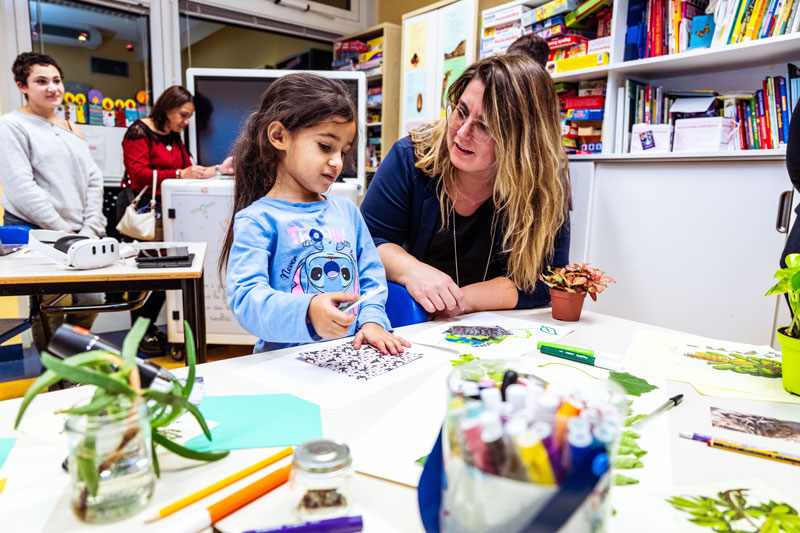
Atelieristas observe and listen, respect individual rhythms, and welcome emotions, questions, and interpretations without anticipating answers or imposing meanings. Through open-ended, non-judgmental questions, they create a space where everyone can feel acknowledged and free to express themselves.
Responsibility and Independence
Responsibility and independence develop gradually and take different forms as children grow. For a young child, this might mean completing a small task without constant adult intervention. For a preteen, it could involve organising an activity or honouring a commitment. For a teenager, it may mean making more complex decisions, pursuing a project, and reflecting on the consequences of their choices.
To encourage these qualities, it is important to give children and young people responsibilities appropriate to their age, avoiding the temptation to step in when they are capable of trying things for themselves. The opportunity to make mistakes is also an essential part of the journey towards greater independence.
Independence and a sense of responsibility are two fundamental dimensions of ABF’s educational approach. They are encouraged, for example, through the principle of learning by doing. Children and young people are directly involved in activities that require them to experiment, create, build, solve problems, and collaborate with others.
Making a mistake is not seen as a failure, but as a step that encourages reflection, correction, and improvement. This helps young people overcome the fear and frustration that can prevent them from engaging in new learning experiences.
At the ABF Art, Music & Digital Labs, for example, young people can explore tools, materials, and different forms of expression independently and mindfully, while also learning to take care of them and respect shared spaces.
Moral and Civic Values
Youth education must also support the development of moral and civic principles that help young people navigate relationships and community life.
Honesty, a sense of justice, respect for shared rules, and responsibility are reflected in the ability to take a stand, engage in dialogue with others, respect collective decisions, and contribute to group life.
Educating young people to become active citizens therefore means creating opportunities for them to participate meaningfully, contributing to shared decisions and projects.
This perspective is also reflected in Target 4.7 of the United Nations 2030 Agenda for Sustainable Development, which includes promoting global citizenship and the knowledge and skills needed to contribute to sustainable development among its educational objectives.
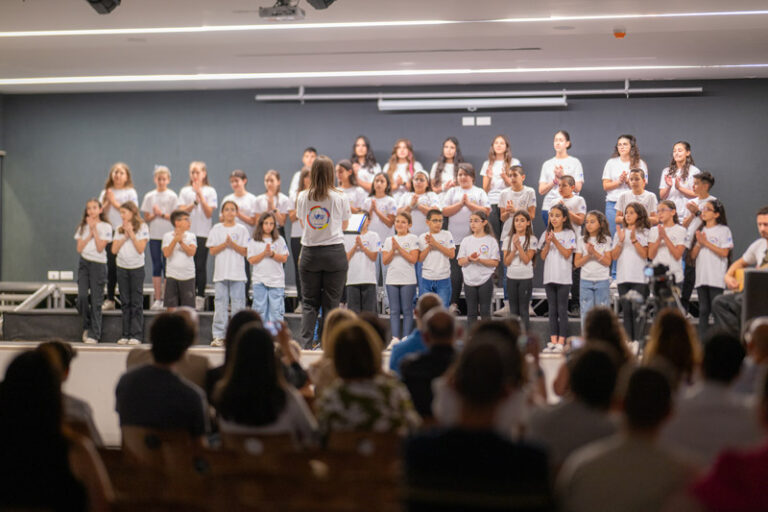
Within ABF’s approach, participation is considered both a value and an educational principle, understood as a practical expression of active citizenship. One positive example is the San Firenze Youth Committee, established as part of the ABF Globalab programme. It provides a space where participants can express their ideas and opinions and contribute to the Foundation’s initiatives.
Communication and Listening
Communication and listening are integral to the entire educational journey. In relationships between parents and children, as well as between teachers and students, dialogue helps people understand needs, difficulties, and different perspectives. It also creates the conditions for children and young people to express themselves and participate actively in their relationships.
However, it is important to remember that listening means much more than simply allowing someone to speak. It also involves asking open-ended questions, allowing enough time for responses, paying attention to non-verbal communication, and avoiding anticipating what young people want to say.
Even when addressing a mistake or a behaviour that needs to be understood, asking questions such as “What happened?” or “What led you to make that choice?” opens up a different kind of dialogue than immediately providing an explanation or an answer.
These principles are put into practice in the educational approach of ABF atelieristas through a powerful dialogic tool: the open-ended, curiosity-driven, non-judgmental question that generates new insights.
Such questions express care and dedication because they stem from a desire to understand others through their creations, which reflect their own perspectives, knowledge, and interpretations of the world. At the same time, they encourage curiosity about phenomena, subjects, and unexplored possibilities, opening up new horizons of meaning and knowledge.
Atelieristas must also avoid imposing predetermined meanings or anticipating participants’ creative intentions, leaving room for authentic listening and free expression.
In this way, dialogue becomes an integral part of the learning process, in which listening and being heard foster trust, exchange, and the sharing of ideas.
Emotional Resilience
Emotional resilience is the ability to navigate difficulties, change, and moments of frustration by learning to recognise one’s feelings and manage one’s reactions. It is closely linked to psychological well-being and to the gradual development of tools for coping with stress, uncertainty, and setbacks.
One of the frameworks considered in Andrea Bocelli Foundation’s programmes is LifeComp – The European Framework for Personal, Social and Learning to Learn Key Competence. Within the area of personal competence, it identifies three particularly relevant dimensions:
- Self-regulation: awareness and management of emotions, thoughts, and behaviour.
- Flexibility: the ability to manage transitions and uncertainty and to face challenges.
- Well-being: taking care of one’s physical, mental, and social health.
Within the Foundation’s programmes, these dimensions are addressed through activities focused on managing emotions, stress, and frustration. This may involve learning to recognise when we feel under pressure, identifying our sources of stress, and finding ways to regulate it. Even changing a routine or adjusting certain aspects of our environment can help reduce stress levels.
Another important aspect is the ability to reflect on feedback and on both successful and unsuccessful experiences in order to continue developing one’s potential.
From this perspective, emotional resilience does not simply mean “withstanding” difficulties. Rather, it involves understanding them, regulating one’s responses, and drawing on past experiences to approach future challenges with greater awareness.
The Role of Families and Schools
Families and schools support young people’s development in different settings and fulfill different but complementary roles.
Within the family, many of the earliest relational experiences take shape. Through everyday life, shared rules, dialogue, and the example set by adults, children and young people begin to develop their own ways of relating to themselves and others.
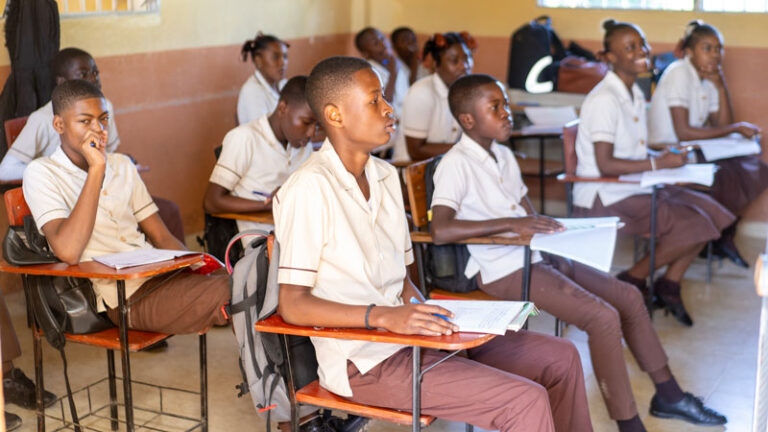
School extends this experience within a structured educational environment. Alongside academic learning, it offers opportunities to interact with peers and adults outside the family, respect common rules, collaborate, take on responsibilities, and participate in group life.
Precisely because their roles are complementary, dialogue between families and schools is essential. It makes it possible to share information, gain a better understanding of children’s needs and difficulties, and support their development through consistent educational goals, while preserving the distinctive characteristics of each setting.
This perspective is also reflected in ABF’s approach, which recognises that education and care emerge from the interaction between families, schools, institutions, and other social stakeholders. Schools are therefore seen as part of a broader educating community, in which different skills and responsibilities work together to support the growth and education of young people.
Conclusion: Building the Foundations for Young People’s Future
Youth education lays the foundations for both individual and collective development.
This conviction lies at the heart of the mission that guides every initiative and programme of Andrea Bocelli Foundation: “Empowering people and communities.”
Through its educational projects, the Foundation gives children and young people opportunities to nurture their potential and acquire the tools they need to participate consciously and responsibly in community life.
This vision takes shape in programmes such as ABF EDU, through which ABF promotes integrated education and care systems in schools and community settings. The programme focuses on spaces, methodologies, and tools that support children’s and young people’s development. This work on learning environments is complemented by the ABF Art, Music & Digital Labs, which bring artistic, musical, and digital forms of expression into everyday educational settings while supporting methodological and pedagogical innovation.
The ABF Globalab programme, meanwhile, focuses on young people’s personal development and guidance. Through hands-on and experiential activities, it supports children and young people in developing socio-emotional and transferable skills, exploring educational and career pathways, and shaping their own life projects.
These programmes differ in their approaches but share a common goal: to create environments, experiences, and opportunities that enable new generations to better understand themselves, develop their abilities, and become active members of their communities.